Students will critically analyze and explore the tools, skills, and
production methods of current and emerging technologies in design media,
with an emphasis on effective and appropriate creative visualization,
analysis and utilization. Students will investigate technology trends
within a historical context, in order to better understand and
extrapolate emerging technology systems. 720A is the first semester and
720B is the second semester of this two semester studio course.
Detailed Description
This studio aims to connect and integrate the areas of interface,
interaction and experience, sequence and time, imaging, information,
networks, and dynamic content. Design technology connects networks of
information and people, which are transitory. This course will discuss
how to cite, show, or publish work that is inherently ephemeral.
Project development is supported with ongoing studio practice,
contextual design research, weekly discussions and readings, critical
analysis, writing, group critiques, and meetings with faculty.
Students are expected to develop innovative research on emerging
technology platforms. Lectures, visiting critics and group discussions
will cover historical uses of technology as well as emerging
applications.
Course Goals
To gain a greater understanding of the historical context of
technology development and its specific relevance to design and
communication.
To explore a wide range of systems to help foster creative
problem-solving and ideation
To acquire a more advanced knowledge of the design tools used for
expression, collaboration and production
To demonstrate the ability to execute sophisticated projects bridging
multiple media options with professional-level workflows, formats and
detail constancy
To acquire an appreciation for the emerging concepts and language of
new media
To gain informational and aesthetic engagement with interactivity
To understand community engagement and user experience with digital
media creation
Technology B is a community of teachers and learners and a space for
experimentation. We are not here to compete, but to support each other’s
learning. We recognize that everyone is moving at their own pace, on
their own track of life. This is a space where we try things we’ve never
done before, where we allow ourselves to be uncomfortable, and where
mistakes are part of the process.
In this space:
We learn by doing, breaking, debugging, and trying again. We encourage
experimentation, risk, and growth over perfection. Progress matters more
than where you started
We learn by doing, breaking, debugging, and trying again. We encourage
experimentation, risk, and growth over perfection. Progress matters more
than where you started
We ask questions early and often to help each other learn. There are no
dumb questions.
We help others when we can. This is a space where it’s okay to not know
something and where asking for help is part of the process, not a
weakness. We’re here to make weird things with technology, together.
Give feedback that’s respectful, specific, and kind.
Share what we learn. Not just our finished projects, but the messy
in-progress stuff too.
Make sure we credit and cite the people, tools and tutorials who help us
get there.
Challenge the idea that technology is neutral or universal. We ask whose
stories it tells and who gets to write them.
If you believe someone is violating this Community Agreement or Code of
Conduct, please report it by emailing the chair, Gaia Hwang. Sometimes,
people may not realize their behavior is harmful. An open, respectful
conversation can often clear things up and help everyone move forward.
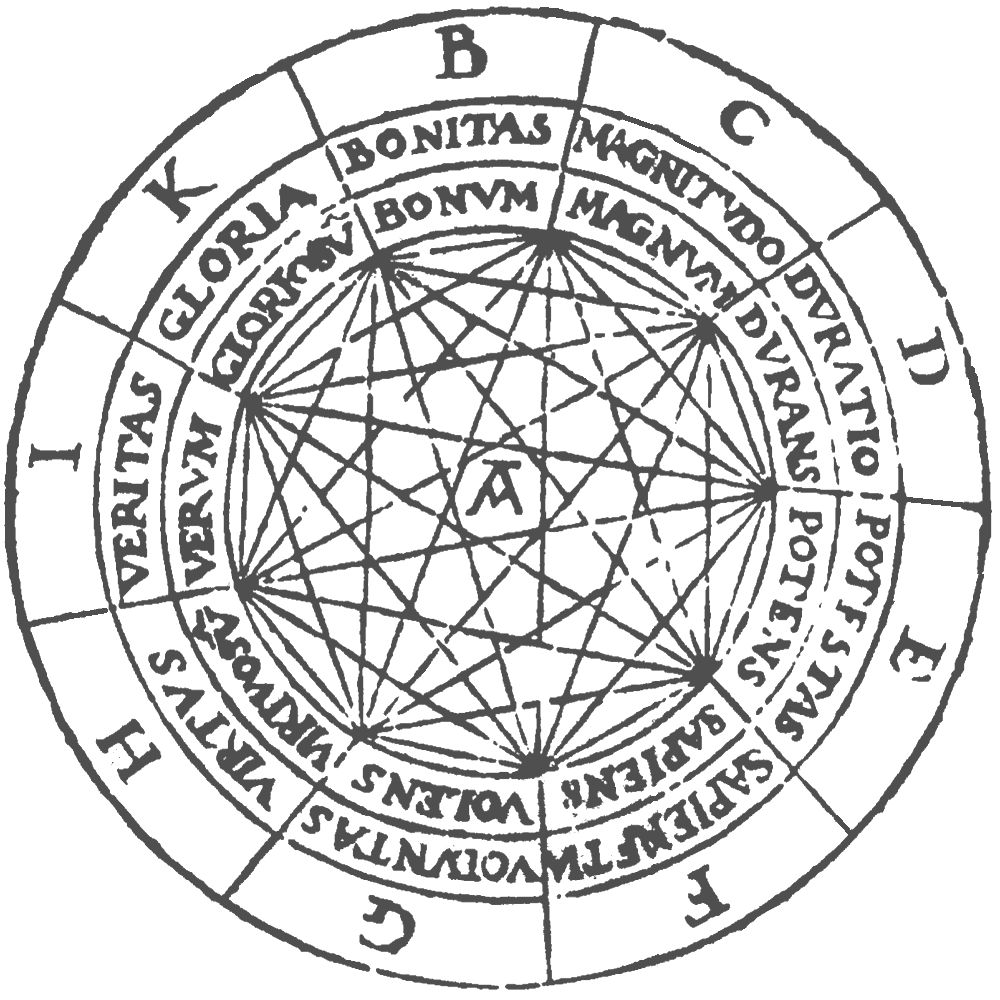
This module examines how intelligence has been modeled, simulated, and
represented across different historical and cultural contexts.
Rather than treating artificial intelligence as a recent technological
breakthrough, the module situates contemporary AI within a longer
history of technological attempts to formalize cognition, prediction,
and decision-making. With critical readings, students will be challenged to compare how
different systems define intelligence, what forms of knowledge they
privilege, and how their underlying assumptions shape human perception
and behavior.
By unpacking these historical precedents alongside the broader history
of technology, students develop a critical foundation for understanding
contemporary computational AI systems not as magical, autonomous
intelligences, but as designed structures that emerge from datasets,
rules, interfaces, and human decisions.
Students will select a historical or computational model of intelligence
and examine its underlying logic through research and prototyping.
Models may range from ancient systems of knowledge and divination to mechanical devices, games, algorithms, simple rules, decision trees,
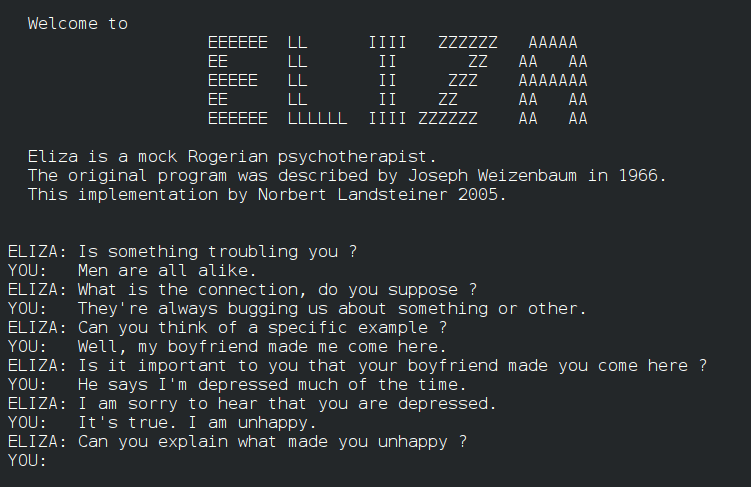
conversational scripts,
classification systems, or other procedural frameworks. By working with
these underlying rules, structures and assumptions, students will
explore how different technologies have attempted to represent or
produce the appearance of intelligence.
Alongside reconstructing these systems, students are encouraged to
consider how their prototype might simulate not only reasoning, but also
affect. They may explore whether a minimal system can produce a
convincing sense of emotional response or relational presence. Rather
than passing a traditional Turing Test based on correctness, the project opens the question of whether a system
can pass a more subjective or emotional threshold, where users perceive intention,
personality, or care.
This module introduces machine learning as a shift from general artificial intelligence and rule-based programming
to systems specifically trained on classification, prediction, and decision-making.
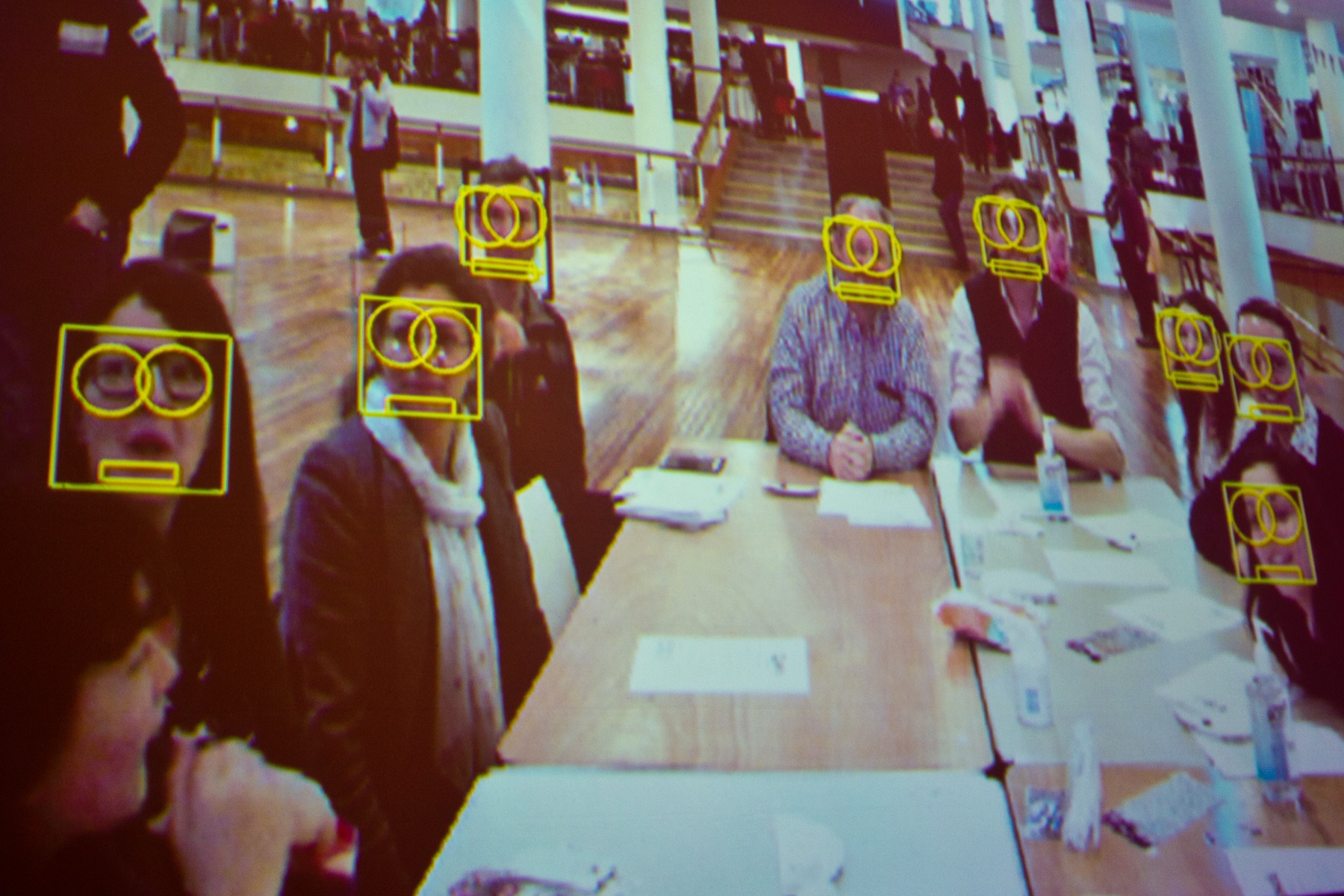
The algorithms powering today's software and generative tools actively scrape, label, and flatten everyday visual culture. This coded gaze inherits the legacy of Enlightenment-era taxonomy and
colonial record-keeping, and now relies on the invisible human labor of data labeling to enforce existing social hierarchies and oversimplify nuanced complexity.
How do technologies decide what gets categorized, classified and sorted?
What happens when complex, lived experiences are reduced to labels,
patterns, and possibilities? And how do these massive algorithmic
systems inherit and reproduce existing power dynamics by shaping what is
visible, recognized or excluded?
In response, we will draw inspiration from contemporary practices in
interaction design and creative coding to actively interrogate and
expose these embedded biases.
How can we as designers, make hidden rules visible, challenge the
categories it imposes and create alternative ways of organizing
knowledge? Together, these works demonstrate how art and design can
function as critical methodologies, offering speculative approaches,
auditing techniques, and alternative frameworks that challenge the
systemic flattening of AI slop.
In Project 2, students will act as both archivist and algorithm to
examine how classification systems generate content, shape knowledge,
and reproduce power. Students will manually construct a corpus of 100 to
500 distinct items and organize it using Morphology, Taxonomy, and Typology (MTT), approaching these systems as subjective and interpretive frameworks
rather than neutral structures.
Through this comparison, students will begin to identify what each
system makes visible or invisible. Manual classification may foreground
nuance, intention, and situated knowledge, while AI systems often
prioritize pattern recognition, scale, and speed. At the same time, both
approaches introduce forms of bias, omission, and distortion. Students
are encouraged to treat these differences not as problems to resolve,
but as material to work with.
At this stage, students will develop these observations into a more
fully formed design proposal, serving as an intermediate waypoint toward
Project 3. Working with patterns, sequences, and a chosen medium, they
will begin to articulate the relationship between human judgment and
machine processing through form. A short written reflection will
accompany the work, considering how both systems produce meaning, where
they break down, and what kinds of cultural or aesthetic assumptions
they reinforce.
This module narrows our focus to Large Language Models (LLMs) and the
contemporary obsession with natural language processing. Operating
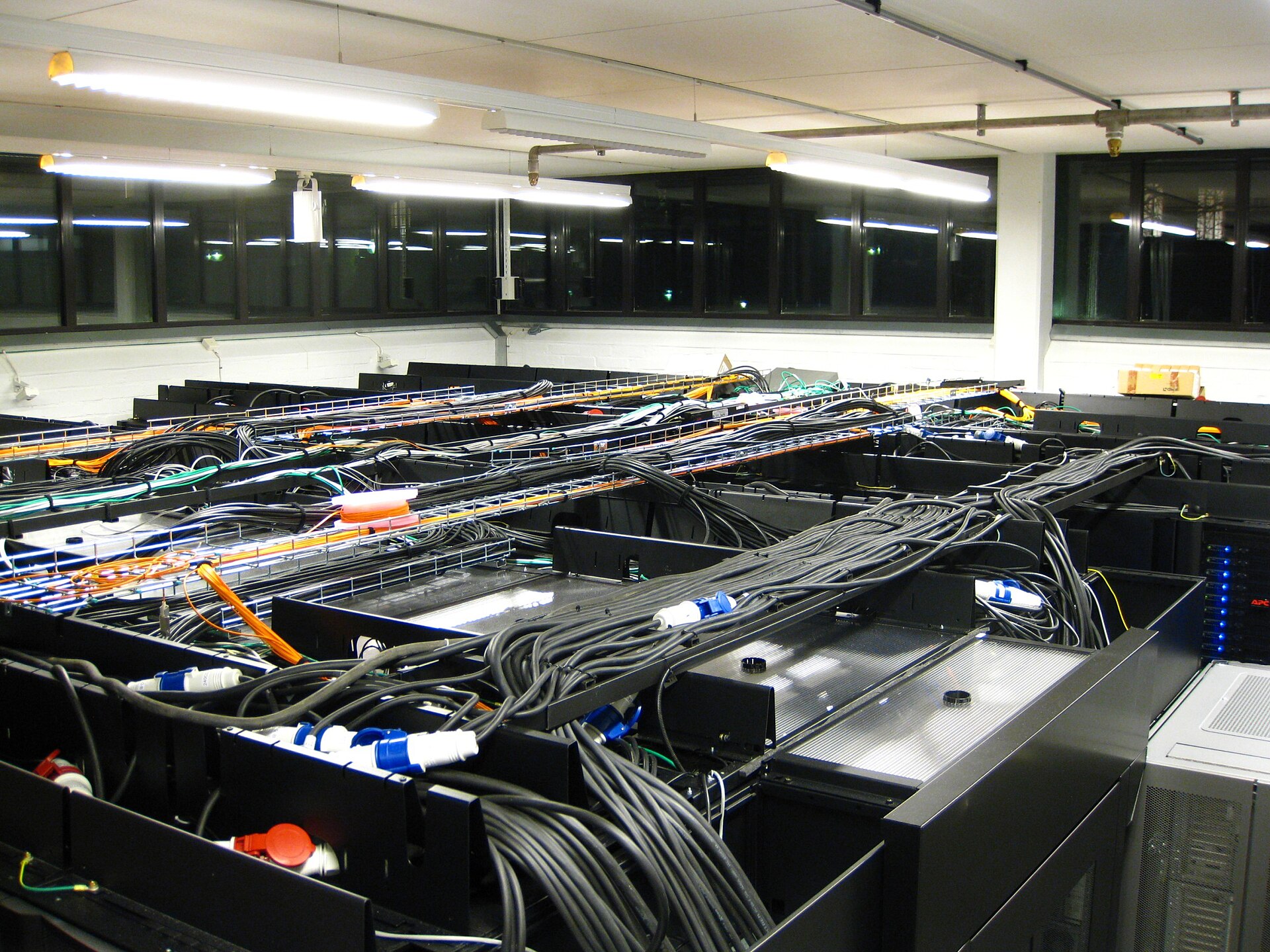
entirely on statistical probability, commercial systems like Claude, ChatGPT and Google NotebookLM simulate genuine comprehension through massive textual extraction. We will
analyze how various proprietary and open-source models differ in their architecture,
yet similarly inherit histories of industrial efficiency, cybernetics, and
techno-utopian thought. By reducing collective cultural memory to computable
weights, these foundation models frame intelligence as an extractable resource. Consequently, the prompt
interface and techniques like chain-of-thought reasoning act as control mechanisms that enforce a rigid, standardized logic on how
knowledge is produced.
Finally, the module explores how art and design can prototype
speculative systems to subvert these dominant language paradigms. By
analyzing these interventions, students will ultimately reclaim these
language technologies as sites for critical world-building and design
alternative interfaces that actively embrace uncertainty, slowness, and
interdependence.
For the final project, students will create a speculative design
prototype that reimagines artificial intelligence beyond dominant
narratives of productivity, optimization, and accelerationism. Using
tools explored throughout the semester, including local language models, custom datasets, archives, physical computing, publishing, or other experimental media, you will imagine an
alternate reality grounded in different values and ways of knowing.
This project asks you to move beyond pure critique alone. What happens
after the critique is written? How do we avoid both technological
utopianism and dystopianism, leaving space for desire, ambiguity, care,
and collective imagination?
Rather than asking how AI can become more efficient or intelligent,
consider how computational systems might support memory, ritual,
ecological relationships, uncertainty, or other forms of knowledge
generation.
Your final outcome should be an exploratory, open-ended design
proposition that uses art and design to imagine alternative
relationships with technology. Rather than offering solutions or
predictions about the future, the work should engage critically with the
tensions and possibilities of computation, exploring how technology
might become a site for imagination, cultural meaning, and alternative
forms of world-building. The medium is open and may take the form of an
interface, publication, installation, artifact, performance, or
something else entirely.
Your performance will be evaluated on its own merits, not based on
comparing your work with other students. We focus on your understanding
of concepts and your ability to apply them in a meaningful way. We don’t
prioritize technology efficiency or professionalism as the primary
criteria. We value the learning process and recognize that everyone
progresses at their own pace.
Should you have any inquiries regarding grading, please don't hesitate
to reach out to the faculty directly.
Active participation is essential and comprises 25% of the final grade.
This includes, but is not limited to: keeping up with readings,
assignments, and projects, contributing meaningfully to class
discussions, active participation in group work, and coming to class
regularly on time.
While attendance is one aspect of active participation, absence from a
significant portion of class can compromise successful attainment of the
course objectives. We consider a significant portion to be three weeks
or 20% of class time. Lateness or early departure from class may be
recorded as one full absence. We encourage you to let us know as much in
advance as possible if you need to miss a class, are running late, or
need to leave class early. More than three uncommunicated absences, late
arrivals, or early departures will result in a deduction from your final
grade.
Collaboration & Learning
Copying, pasting, and reusing code is a natural and valuable part of
learning technology and programming. Often, the best way to learn is by
modifying existing examples, experimenting with libraries, and building
on others’ work. This collaborative spirit is at the heart of the
open-source philosophy: we stand on the shoulders of giants. That said,
there are important guidelines to ensure fairness, learning, and
academic integrity:
Following these guidelines supports your learning, respects the work of
others, and helps maintain a fair and productive classroom environment.
Turn In Individual Work
Programming is a collaborative and creative process, and you are
encouraged to help each other learn and grow.
However, unless otherwise stated, all assignments and projects must
represent your own individual work.
Label Borrowed Code
Always label borrowed code. If you use code from open-source projects,
tutorials, online forums, libraries, or AI tools. Whether you copy it
exactly or modify it, you must clearly acknowledge your sources. When in
doubt, include comments at the top of your code specifying where the
original code came from and how you adapted it.
Understand What You Use
You should be able to explain how any borrowed or adapted code works,
including AI-generated code. This helps us better assess your learning
and ensures that you’re actively engaging with the material, not just
copying.
No Full Project Copying
Do not submit someone else’s full project as your own. Reusing snippets
or functions is allowed with credit, but turning in entire projects
created by others is not permitted.
Respect Licenses
Respect licenses. When using open-source libraries or code, respect the
terms of their licenses. Some may require attribution or have
restrictions on commercial use.
AI Tools & External Resources
You are encouraged to use AI tools (such as ChatGPT, GitHub Copilot,
etc.) and external resources as part of your learning process. However,
any AI-generated content included in your submission must be clearly
disclosed and credited. You remain responsible for ensuring that the
code works correctly and that you understand it fully.
Academic Integrity
Academic integrity at Pratt means using your own and original ideas in
creating academic work. It also means that if you use the ideas or
influence of others in your work, you must acknowledge them.
Consistent attendance is essential for the completion of any course or
program. Attending class does not earn students any specific portion of
their grade, but is the pre-condition for passing the course, while
missing class may seriously harm a student’s grade.
Pratt Institute is committed to fostering an environment that is safe,
secure and free from sex discrimination and sexual harassment, sexual
violence, dating and domestic violence, and stalking among all forms of
sexual misconduct.
Equipment is available for Pratt students. Some equipment requires some
training. Be on the lookout for available training sessions posted
throughout the school.
Pratt students have access to a wide range of facilities within the
Department and around campus. Design School facilities include a wood
shop, a metal shop, a photo studio, and there is access to computers in
the studio, and in the Engineering and Machinery buildings.
The Industrial Design Shop provides the tools to fabricate both
small-scale models or full-size prototypes and functioning products.
Wood, plastics, dense foam, and metals are among the many types of
material that can be machined or manipulated.
In order to access the shop, students must register for and complete a
shop certification course (IND-001).
The Tool Room
The Tool Room provides hand tools for students to check out during shop
hours. The shop houses a spray booth for exclusively water-based paints
and finishes.
Several full-time staff technicians are available to help students with
technical questions about materials and fabrication techniques.
Academic Support
For assistance with writing assignments, contact the Writing and
Tutorial Center at wtc@pratt.edu. The Pratt Libraries can also help with research and citations.
Academic advisors are also a great resource; students can find their
advisor’s contact information or schedule an appointment through Starfish.
The Learning/Access Center (L/AC) coordinates access for students with
disabilities. Students who identify as having any type of disability are
entitled and encouraged to enroll with the L/AC in order to determine
and implement reasonable accommodations.
Contact the Learning/Access Center at lac@pratt.edu or 718.802.3123 for information or to schedule an appointment.
Wellbeing
Pratt is dedicated to creating a culture where the entire community can
flourish and thrive. Taking time to care for yourself and seeking
appropriate support is important to achieving your academic and
professional goals.
The Counseling Center can be reached 24/7 by calling 718.687.5356. To
schedule a consultation, please call or email therapy@pratt.edu.
Public Safety & Emergency Contacts
The Department of Public Safety provides 24-hour-a-day protection to the
campus. Contact Public Safety at security@pratt.edu or 718.636.3540.
Ask me about a module, project, reading, tool, deadline, grading, or
course policy.



_(9005217351).jpg)

.jpg)